Antonella Abbate • 4 December 2024

South Australia Introduces U-Class Driving License

A New Era in Road Safety
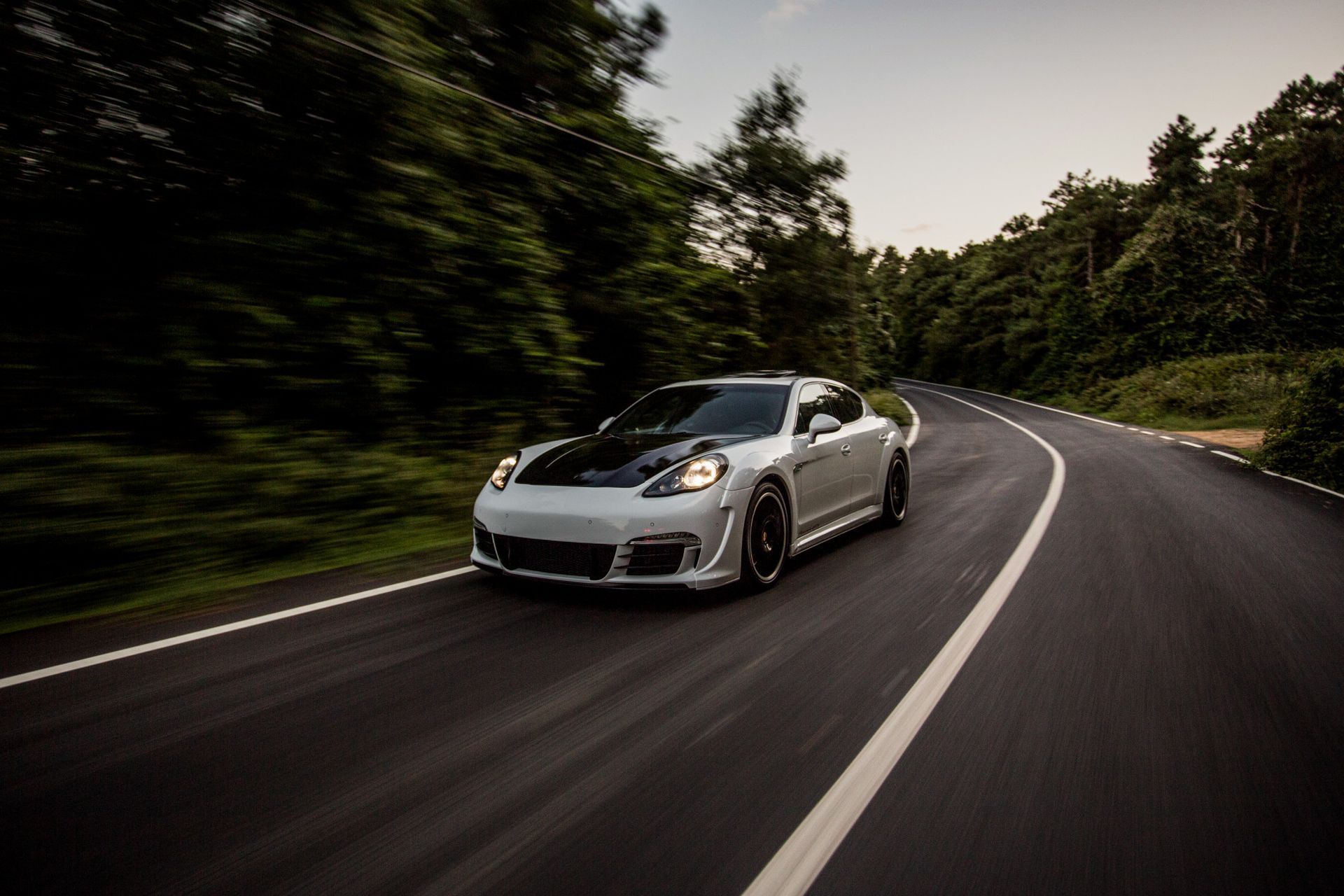
South Australia has announced an exciting update to its driving license framework with the introduction of the U-Class license. This new category, based on a vehicle's power-to-weight ratio, aims to improve road safety, promote responsible driving, and ensure that drivers have the skills and experience necessary to handle high-performance vehicles.

What is the U-Class License?

The U-Class license is specifically designed for drivers who wish to operate vehicles with a high power-to-weight ratio. This ratio measures a vehicle’s performance potential by dividing its engine power (measured in kilowatts) by its weight (in kilograms). High ratios often indicate vehicles with greater acceleration and handling capabilities, which can be more challenging to control.

This new category introduces an additional layer of regulation, ensuring drivers possess the knowledge, experience, and skills required to safely operate these vehicles.

Why is the U-Class License Necessary?

Safety First:
High-performance vehicles are increasingly popular, but their power and speed can pose risks if not handled responsibly. The U-Class ensures that only capable drivers can access these vehicles, reducing the likelihood of accidents caused by inexperience or misuse.

Encouraging Responsible Driving:
By requiring additional training and assessments, the U-Class license promotes responsible driving behaviors and reduces the risks associated with operating powerful vehicles.

Adapting to Automotive Advances:
With advancements in automotive engineering, even smaller vehicles can now deliver high power outputs. The U-Class ensures that licensing keeps pace with these innovations.

Eligibility for the U-Class License

To qualify for a U-Class license, applicants must:

Hold a valid South Australian driver's license for a minimum of three years.

Complete an approved high-performance vehicle training course.

Pass a practical driving test designed for high-performance vehicles.

The training focuses on understanding the dynamics of high-powered vehicles, hazard perception, and advanced vehicle control techniques.

Vehicles Under the U-Class Category

Vehicles eligible for the U-Class are defined by a power-to-weight ratio exceeding 130 kilowatts per tonne. This includes:

High-performance sedans and coupes.

Sports cars and some luxury vehicles.

Modified vehicles meeting the power-to-weight threshold.

A detailed list of vehicles requiring a U-Class license is available on the South Australian Department of Infrastructure and Transport website.

Impact on Current Drivers

Existing license holders who operate vehicles that now fall under the U-Class category must upgrade their license by completing the required training and testing. Transitional provisions are in place to give drivers adequate time to comply with the new regulations.

Benefits of the U-Class License

Enhanced Safety: With better-trained drivers on the road, the risk of high-speed accidents is expected to decrease.

Improved Road Skills: Drivers will gain advanced skills that can be applied to everyday driving, improving overall road safety.

Protecting Road Users: The new category ensures that all road users share a safer driving environment.

Conclusion

The introduction of the U-Class license is a progressive step toward aligning South Australia's driving regulations with modern vehicle capabilities. By ensuring that only trained and responsible drivers can handle high-performance vehicles, the U-Class category promises safer roads for everyone.

For more information on how to upgrade to a U-Class license, visit the South Australian Department of Infrastructure and Transport website or contact your nearest licensing center.
by Antonella Abbate 25 May 2026
Across the Tasman this week, Chinese automotive giant BYD confirmed that almost 5,000 electric and plug-in hybrid vehicles are currently bound for Australia aboard its own dedicated vehicle carrier, the BYD Zhengzhou. The shipment, carrying 4,810 vehicles, marks the first Australian voyage of one of BYD’s purpose-built roll-on/roll-off vessels and is expected to dock in Melbourne before continuing to Sydney and Brisbane. What makes this story significant is not simply the size of the shipment, but what it says about the Australian market. BYD has already announced plans to bring an additional 30,000 new-energy vehicles to Australia in the coming months as demand for electric vehicles and hybrids continues to surge. For decades, Australian motorists were among the most loyal supporters of Japanese manufacturers, with brands from Toyota, Mazda, Mitsubishi, Nissan and Honda dominating local driveways. Few industry observers would have predicted that Chinese brands would achieve such rapid acceptance. Yet Australian consumers have embraced brands such as BYD, MG, GWM, Chery, Geely, Zeekr and others with remarkable speed, treating many of them as though they have been established players for generations. Australia’s transition mirrors trends seen throughout Europe and North America, where consumers are increasingly seeking lower running costs, improved technology, longer warranties and electrified drivetrains. The difference in Australia is that much of this growth is being driven by Chinese manufacturers rather than traditional Western brands. Affordability, strong specifications, competitive warranty programs and rapid product development have reshaped buyer perceptions almost overnight. BYD’s decision to deploy its own shipping fleet to Australia is perhaps the clearest signal yet that global manufacturers now view Australia as a strategic growth market. When a manufacturer is prepared to invest in dedicated logistics to deliver thousands of vehicles directly to Australian customers, it demonstrates confidence not only in its products but also in the appetite of Australian motorists for electrified transport. The message is simple: Australia's EV and hybrid revolution is no longer coming—it has arrived, and Chinese manufacturers are playing a leading role in shaping the next chapter of the nation's automotive landscape.
by Antonella Abbate 25 May 2026
Mr Lamb brings decades of diverse leadership experience across various sectors, both domestically and internationally. Most recently, he served as the Chief Executive Officer of the Murray-Darling Association. Previously, Mr Lamb has held several executive roles with distinct peak body organisations, where he worked closely with government and industry. During his tenure, assisted many organisations to transition into new strategies and methodologies. With his notable experience, he is well positioned to lead the ARC at a time when the refrigeration and air conditioning (RAC) industry is growing at a rapid pace. Mr Lamb succeeds Glenn Evans, who concluded his tenure in December 2025 after 17 years of service. ARC Chair Dr Greg Picker said he was pleased to welcome Mr Lamb to mark the next phase for the Council, which leads national governance of the RAC (also known as ARCtick) Permit Scheme. “The Board is pleased to appoint Mark Lamb as our new CEO. We look forward to working with him as we continue to deliver the ARCtick permit scheme and improve our service to industry. His passion and experience in leading peak body organisations perfectly aligns with the ARC’s priorities at this time and our vision for the future,” Dr Picker said. “It is a crucial time for the industry, and the Board is confident Mark will help us build on our momentum and continue deliver meaning outcomes for the ARC and the broader industry.”  Commenting on his appointment, Mr Lamb said, “I am thrilled to be given this opportunity to play this significant role, not just at the Australian Refrigeration Council, but in the refrigeration and air conditioning industry.
by Antonella Abbate 25 May 2026
For a company long associated with precision internal combustion performance engines and premium driving dynamics, the production of BMW Group’s two millionth fully electric vehicle is far more than a symbolic milestone. It represents a major industrial transition within one of Europe’s most engineering-driven automotive manufacturers.