

Motul NGEN Hybrid Engine Oils: Advancing Lubrication for Electrified Powertrains
By Dean Rothapfel - Oceania Country Manager
Motul Asia Pacific

Introduction
The rapid electrification of the automotive sector has fundamentally altered lubrication requirements. Hybrid vehicles—combining internal combustion engines (ICEs) with electric motors—operate under unique and highly variable duty cycles. These include frequent start-stop events, reduced steady-state operation, lower average oil temperatures, and increased fuel dilution risks. To address these challenges, Motul has introduced its NGEN Hybrid range, including NGEN Matic, a line of technologically advanced, sustainable lubricants engineered specifically for hybrid and electrified transmissions.
This article explores the formulation approach, key features, performance attributes, and benefits of Motul’s NGEN Hybrid oils, with particular emphasis on NGEN Matic transmission fluids.
Engineering Challenges in Hybrid Lubrication
Hybrid powertrains impose distinct stresses compared to conventional ICE vehicles:
- Frequent engine start-stop cycles increase wear during boundary lubrication phases.
- Lower operating temperatures hinder evaporation of contaminants, increasing sludge formation risk.
- Fuel dilution reduces oil viscosity and compromises film strength.
- Electrified components in e-transmissions require compatibility with electrical systems.
- Torque fluctuations from combined ICE and electric motor operation demand robust shear stability.
These factors necessitate lubricants that can maintain performance across a broader thermal and operational spectrum.
Motul NGEN: A Sustainable Lubrication Platform
Motul’s NGEN (Next Generation) range represents a shift toward sustainability without compromising performance. Key aspects include:
- Regenerated base oils (re-refined oils): Derived from recycled lubricants using advanced purification and re-refining processes.
- High-performance additive packages: Tailored to ensure durability, cleanliness, and protection even in demanding hybrid environments.
- Reduced environmental footprint: Lower lifecycle CO₂ emissions compared to traditional virgin oil formulations.
The NGEN concept aligns with circular economy principles—reusing high-quality materials while maintaining OEM-grade performance.
Formulation Process
1. Base Oil Regeneration
Used oils undergo:
- Dehydration and contaminant removal
- Vacuum distillation
- Hydrotreatment and hydrofinishing
This produces Group II+ / Group III quality base oils, achieving purity levels comparable to virgin stocks.
2. Additive Integration
Motul incorporates advanced additive systems engineered for hybrid conditions:
- Friction modifiers for efficiency
- Anti-wear agents for start-stop protection
- Detergents/dispersants for deposit control
- Oxidation inhibitors for extended life
- Anti-foam and shear stability enhancers
3. Hybrid-Specific Optimization
The formulation is tuned to:
- Maintain viscosity despite fuel dilution
- Deliver rapid oil circulation at low temperatures
- Ensure compatibility with electric motor insulation systems
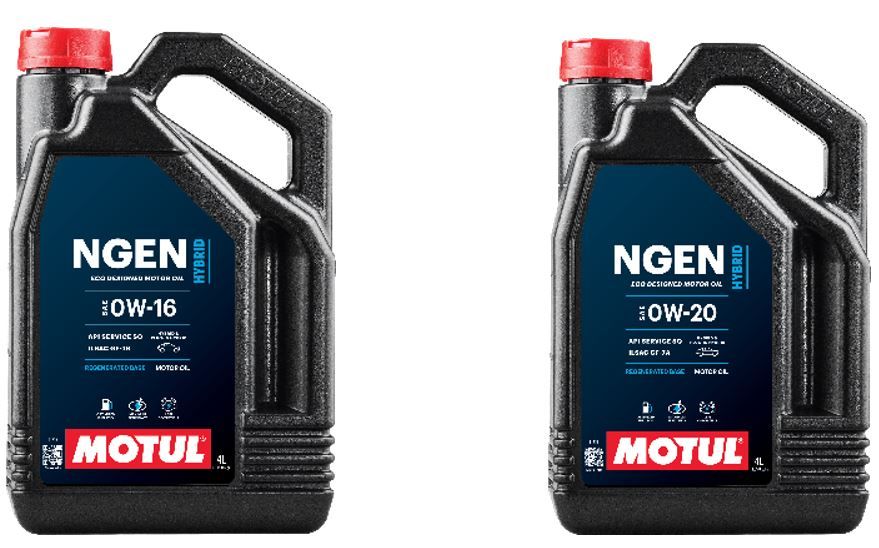
NGEN Hybrid Engine Oil: Key Features and Benefits
Features
- Low-viscosity formulation (e.g., 0W-20, 0W-16 typical)
- Enhanced oxidation resistance
- Fuel economy optimization
- High thermal stability
- Improved detergency and sludge control
- Start-stop wear protection
- Compatibility with after-treatment systems
Benefits
- Improved fuel efficiency: Reduced hydrodynamic friction supports hybrid energy-saving strategies.
- Extended engine durability: Superior anti-wear chemistry protects during frequent restarts.
- Cleaner engines: Reduced deposit formation under low-temperature operation.
- Environmental impact reduction: Lower CO₂ footprint through regenerated base stock usage.
- Consistent performance: Maintains viscosity and film strength even under dilution conditions.
NGEN Matic: Transmission Fluids for Electrified Drivelines
Hybrid vehicles increasingly use electrified automatic transmissions (e-AT), dual-clutch systems, or e-CVTs, requiring specialized fluids. Motul’s NGEN Matic range addresses these needs.
Key Technical Requirements in Hybrid Transmissions
- Simultaneous lubrication of mechanical gears and electric motor components
- Electrical conductivity control to prevent arcing
- Thermal management in compact transmission housings
- High shear stability under torque blending conditions
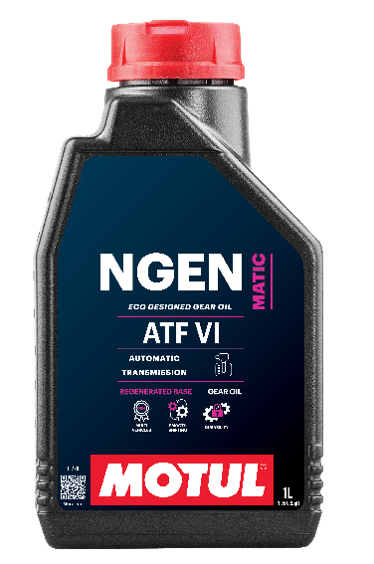
NGEN Matic: Features
- Multi-vehicle compatibility for modern automatic and hybrid transmissions
- Electromagnetic compatibility (EMC): Safe for electric motor integration
- Optimized friction characteristics for smooth clutch engagement
- High shear stability to maintain viscosity under load
- Enhanced thermal conductivity for improved heat dissipation
- Oxidation and deposit resistance for extended fluid life
NGEN Matic: Performance Advantages
1. Efficiency Gains
Optimized frictional properties reduce parasitic losses in the transmission, supporting overall vehicle efficiency—critical in hybrids where energy management is central.
2. Smooth Power Delivery
Precise friction control ensures seamless transitions between electric and ICE drive modes, enhancing drivability.
3. Component Protection
- Protects gears, bearings, and clutches from wear
- Safeguards electric motor windings and insulation systems
- Prevents varnish buildup that can impair solenoid and valve operation
4. Thermal Management
Improved heat transfer characteristics help maintain stable operating temperatures, especially in compact hybrid e-drive units.
5. Longevity and Reliability
High oxidation resistance extends service intervals while maintaining consistent performance over time.
Sustainability and Lifecycle Impact
Motul’s NGEN platform, including NGEN Matic, delivers measurable environmental benefits:
- Reduced reliance on crude oil extraction
- Lower lifecycle emissions
- Promotion of circular resource utilization
- Alignment with OEM sustainability targets
The use of regenerated base oils does not compromise lubricant quality due to advanced refining technologies.
Comparative Performance
Compared to conventional lubricants, NGEN Hybrid and NGEN Matic fluids offer:
| Performance Attribute | Conventional Oils | NGEN Hybrid / NGEN Matic |
|---|---|---|
| Fuel efficiency | Moderate | High |
| Wear protection | Good | Enhanced (start-stop) |
| Thermal stability | Moderate | High |
| Sustainability | Low | High |
| Hybrid compatibility | Limited | Optimized |
| Service life | Standard | Extended |
Conclusion
Motul’s NGEN Hybrid engine oils and NGEN Matic transmission fluids represent a significant advancement in lubrication technology tailored for electrified mobility. By combining high-performance additive chemistry with regenerated base oils, these products meet the dual objectives of technical excellence and environmental responsibility.
As hybrid vehicles become more prevalent, specialized lubricants like NGEN and NGEN Matic will play a critical role in maximizing efficiency, durability, and sustainability across next-generation powertrains.
For further information or technical data go to www.motul.com