Workshop Safety
Protecting the Most Valuable Tool in the Workshop – Your People
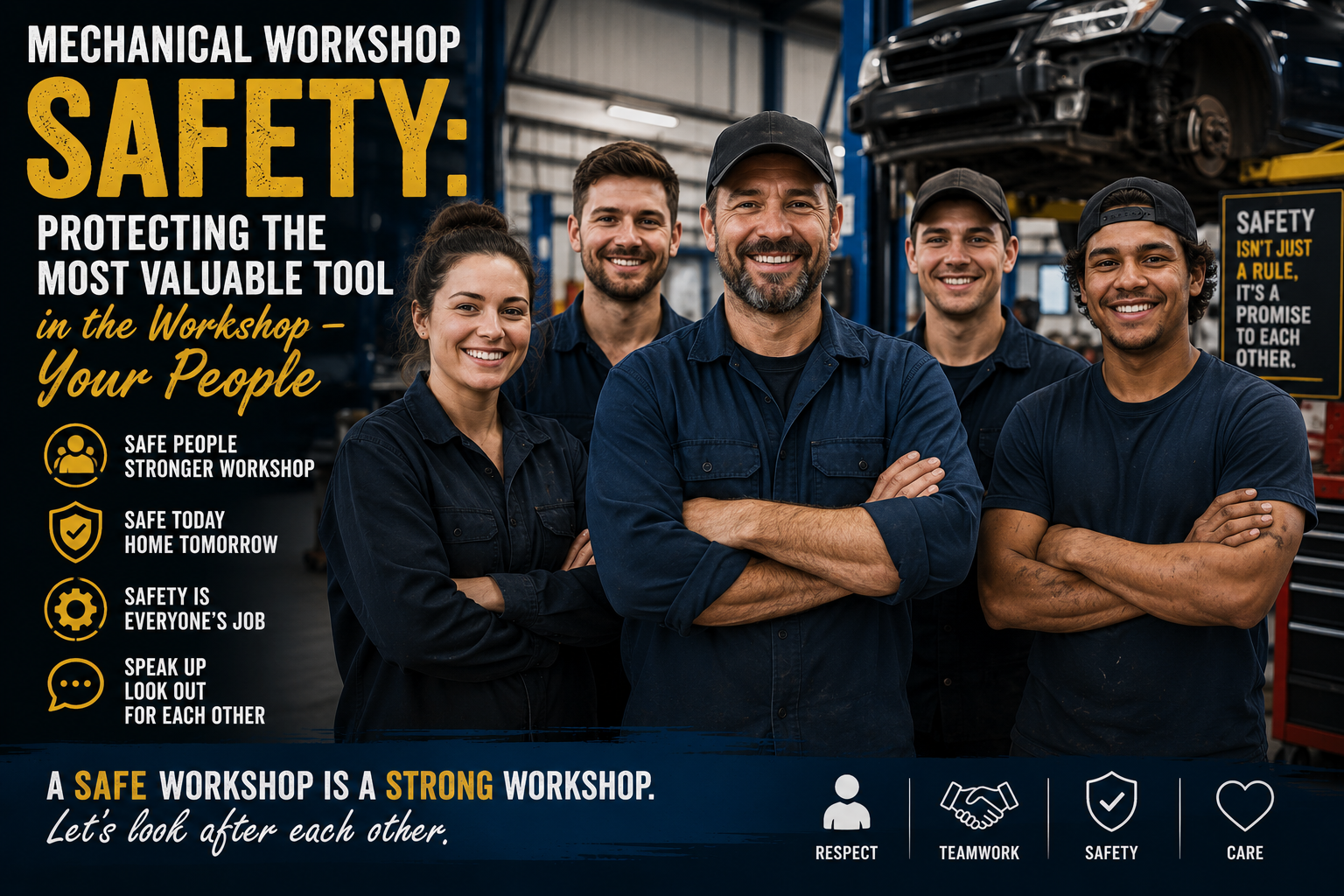
In every mechanical workshop, safety should be more than a policy—it should be a way of life.
Automotive technicians work in environments filled with potential hazards every day. From vehicle hoists and heavy machinery to hazardous chemicals, electrical systems, power tools and moving vehicles, the risks are real. While these hazards are often considered part of the job, workplace injuries are not inevitable. Most incidents can be prevented through proper training, safe work practices, and a strong commitment to workplace safety.
The latest figures from Safe Work Australia highlight why workplace safety remains such an important issue. According to the Key Work Health and Safety Statistics Australia 2025 Report, 188 Australian workers lost their lives due to traumatic workplace injuries in 2024. While this represents a slight decrease from the previous year, it is still 188 families who lost a loved one simply because they went to work. Furthermore, there were 146,700 serious workers' compensation claims involving at least one week off work during 2023–24. That's more than 400 serious workplace injuries every single day across Australia.
Vehicle-related incidents continue to be the leading cause of workplace fatalities, accounting for 42% of all workplace deaths, followed by falls from height at 13%. For automotive workshops, where vehicles are constantly being moved, lifted, tested, and repaired, these statistics serve as an important reminder that vehicle safety procedures must never be overlooked.
The report also found that 84% of all serious workplace injury claims resulted from just four causes:
• Body stressing and manual handling injuries
• Falls, slips and trips
• Being hit by moving objects
• Mental stress
These are all hazards commonly encountered in mechanical workshops. Something as simple as lifting a transmission incorrectly, failing to clean an oil spill, or working beneath an improperly supported vehicle can result in life-changing injuries.
Key Statistics:
🔧 188 Australian workers died from traumatic workplace injuries in 2024
🔧 146,700 serious workers' compensation claims in 2023–24
🔧 More than 400 serious workplace injuries occur every day in Australia
🔧 Vehicle incidents account for 42% of workplace fatalities
🔧 84% of serious injury claims involve body stressing, slips/trips/falls, moving objects or mental stress
🔧 Mental health claims now represent 12% of all serious workers' compensation claims and continue to rise
Daily Workshop Safety Checklist:
☐ PPE worn correctly
☐ Work area clean and tidy
☐ Hoists inspected
☐ Tools in good condition
☐ Chemicals stored correctly
☐ Fire extinguishers accessible
☐ Spill kits stocked
☐ Walkways clear
☐ Emergency exits unobstructed
☐ Hazards reported
Another concerning trend is the rise in workplace mental health claims. Mental health conditions now account for 12% of all serious workers' compensation claims, an increase of 14.7% from the previous year. These claims also result in significantly longer periods away from work than physical injuries. While physical hazards are often visible, mental health and workplace wellbeing are equally important aspects of a safe and productive workplace.
For tradespeople and technicians, the risks can be even greater. Safe Work Australia reports that machinery operators, drivers, technicians and trade-related occupations continue to experience some of the highest rates of workplace injuries and fatalities. This reinforces the need for ongoing safety training, supervision, and adherence to safe work procedures within automotive workshops.
The good news is that workplace injuries are preventable.
A safe workshop starts with a strong safety culture where everyone takes responsibility for identifying hazards, reporting near misses, following procedures, and looking out for their workmates. Safety is not just the responsibility of management—it belongs to every person who walks through the workshop door.
Simple actions can make a significant difference:
- Wearing appropriate personal protective equipment (PPE)
- Following safe lifting techniques
- Correctly operating vehicle hoists and workshop equipment
- Maintaining clean and organised work areas
- Properly storing and handling hazardous chemicals
- Reporting hazards and near misses immediately
- Participating in regular safety training
Some workers see safety procedures as an inconvenience or something that slows down the job. In reality, the safest workshops are often the most productive. Fewer injuries mean less downtime, lower costs, improved morale, and a more professional workplace.
At the end of the day, no repair job, customer deadline, or productivity target is worth risking someone's health or life. Every technician, apprentice, service advisor, and workshop manager deserves to go home safely to their family at the end of every shift.
Safety isn't just about compliance. It's about protecting people.
Because the most valuable asset in any workshop isn't the tools, equipment, or vehicles—it's the people who use them.
Mechanical Workshop Safety Guide: NSW Automotive Workshops – Safety Tips & Best Practice
Purpose: This guide provides practical workplace health and safety (WHS) information for automotive repair workshops in New South Wales. It is based on requirements under the Work Health and Safety Act and Regulations and industry best practices. Common workshop hazards include moving vehicles, vehicle hoists, hazardous chemicals, electrical systems, manual handling, slips, trips, falls, and fire risks.
Personal Protective Equipment (PPE)
All workshop personnel should wear appropriate PPE at all times:
Mandatory PPE
- Safety glasses or face shield
- Steel-capped safety boots
- Workshop overalls or suitable clothing
- Mechanic's gloves where appropriate
- Hearing protection in noisy areas
Additional PPE
- Welding helmet and welding gloves
- Respiratory protection when grinding, sanding, spraying, or working with chemicals
- High-visibility clothing when working around moving vehicles
Never:
- Wear loose clothing or jewellery around machinery
- Wear damaged PPE
- Use PPE as a substitute for proper safety procedures
Housekeeping & Workshop Cleanliness
Good housekeeping prevents injuries and improves efficiency.
Keep Work Areas:
- Clean and tidy
- Free from oil and fluid spills
- Clear of unnecessary tools and equipment
- Well lit
Daily Checks:
- Clean oil spills immediately
- Return tools to storage after use
- Remove trip hazards
- Empty waste bins regularly
Slips, trips and falls remain one of the most common causes of workplace injuries in automotive workshops.
Vehicle Hoists & Lifting Equipment
Only trained personnel should operate hoists.
Before Lifting:
- Inspect hoist for damage
- Check lifting points are correct
- Confirm vehicle weight is within hoist capacity
- Position lifting arms correctly
Never:
- Work under an unsupported vehicle
- Exceed hoist capacity
- Allow anyone inside the vehicle while raising or lowering
Additional Safety:
- Use axle stands where required
- Keep the area around hoists clear
- Report any defects immediately
Manual Handling
Musculoskeletal injuries are common in workshops due to lifting and awkward postures.
Safe Lifting:
- Assess the load first
- Bend your knees, not your back
- Keep loads close to your body
- Ask for assistance with heavy items
Use Mechanical Aids:
- Engine cranes
- Transmission jacks
- Trolleys
- Wheel lifters
Hazardous Chemicals
Automotive workshops commonly use:
- Solvents
- Degreasers
- Paints
- Brake cleaners
- Fuel
- Battery acid
- Used oils
- Coolants
These substances can cause burns, respiratory illness, skin conditions, fires and explosions if not managed correctly.
Chemical Safety Rules:
- Read Safety Data Sheets (SDS)
- Follow manufacturer instructions
- Ensure containers are labelled
- Store chemicals correctly
- Use spill kits when required
Never:
- Mix chemicals unless authorised
- Store fuel near ignition sources
- Use unidentified chemicals
Electrical Safety
Before Working:
- Inspect leads and tools
- Remove damaged equipment from service
- Use RCD-protected outlets
Electric & Hybrid Vehicles
High-voltage systems can cause serious injury or death.
Only appropriately trained personnel should:
- Isolate EV systems
- Remove high-voltage components
- Perform battery repairs
High-voltage batteries present significant electrical hazards if incorrect procedures are followed.
Fire Safety
Potential ignition sources include:
- Welding equipment
- Grinders
- Battery chargers
- Electrical faults
- Hot vehicle components
- Flammable liquids
Fire Prevention:
✓ Keep flammables in approved storage cabinets
✓ Maintain fire extinguishers
✓ Know evacuation procedures
✓ Keep exits clear
Fire Extinguishers:
- Dry Chemical Powder (A:B:E)
- CO₂ for electrical fires
- Foam where appropriate
Fire and explosion risks from solvents, fuels and gases are a significant workshop hazard.
Workshop Traffic Management
Vehicle Movement Rules:
- Use designated walkways
- Drive at low speed
- Use spotters when visibility is restricted
- Sound horn when reversing if required
Pedestrian Safety:
- Stay alert around moving vehicles
- Avoid blind spots
- Never walk behind reversing vehicles
Being struck by vehicles or plant remains a major injury risk in automotive workplaces.
Compressed Air Safety
Safe Practices:
- Wear eye protection
- Inspect hoses regularly
- Secure air fittings
Never:
- Use compressed air to clean clothing
- Direct compressed air at another person
Welding & Grinding Safety
Before Starting:
- Remove flammable materials
- Wear appropriate PPE
- Ensure adequate ventilation
Protect Others:
- Use welding screens
- Isolate work areas
- Control sparks
Grinding and cutting operations can generate flying debris and hazardous dust.
Ventilation & Air Quality
Workshops must maintain adequate ventilation to reduce exposure to:
- Exhaust fumes
- Carbon monoxide
- Diesel emissions
- Welding fumes
- Chemical vapours
Poor ventilation can contribute to serious health issues.
Controls:
- Use extraction systems
- Open doors when practical
- Never run engines unnecessarily indoors
Emergency Procedures
Every workshop should have:
Emergency Equipment
- First aid kit
- Fire extinguishers
- Spill kits
- Emergency contact list
Employees Must Know:
- Emergency exits
- Assembly point location
- Fire extinguisher locations
- First aid procedures
- Incident reporting process
Incident & Hazard Reporting
Report immediately:
- Injuries
- Near misses
- Unsafe equipment
- Chemical spills
- Electrical faults
- Vehicle incidents
Early reporting helps prevent serious accidents.
"Think Safe. Work Safe. Go HOme Safe."
Every employee has a responsibility to identify hazards, follow procedures, and contribute to a safe workshop environment.
A few seconds spent working safely can prevent a lifetime injury.