
The Visionaries Behind Japan's Greatest Automotive Brands
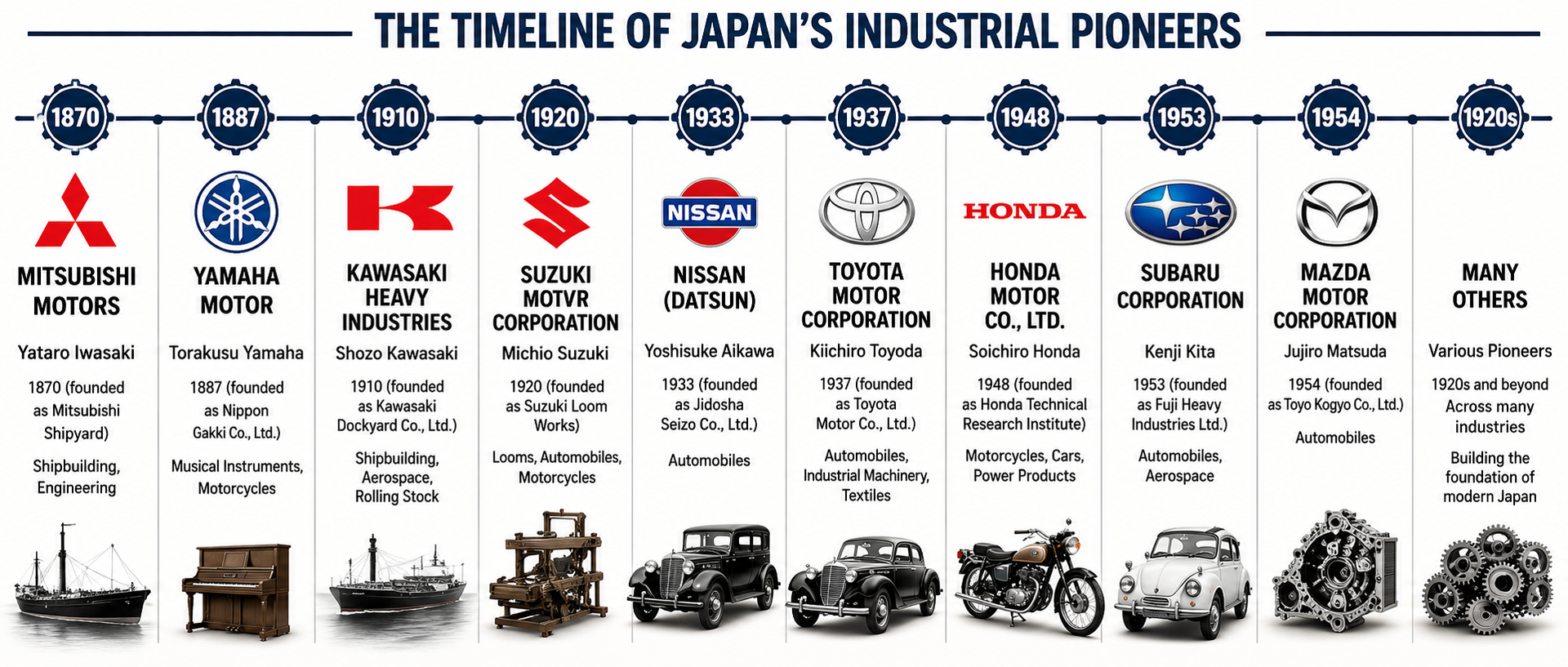
When discussing the world's automotive powerhouses, Japan consistently ranks among the very best. Its manufacturers have earned a global reputation for quality, innovation, reliability and engineering excellence. But long before these companies became household names, they were ambitious ideas brought to life by extraordinary individuals.
The founders of Japan's most recognised automotive brands came from remarkably different backgrounds. Some were mechanics, others were entrepreneurs, shipbuilders, aircraft designers or manufacturers of textile machinery. What united them was a determination to solve problems, embrace new technology and build products that would improve people's lives.
Their combined influence not only transformed Japan into an industrial leader but also changed the way vehicles are designed, manufactured and serviced across the world.
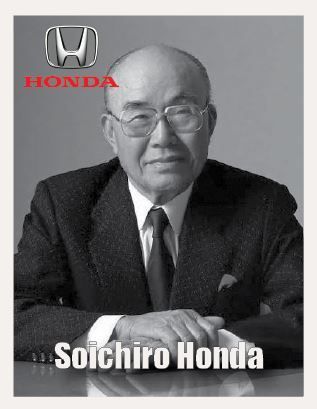
Soichiro Honda – Honda
For Soichiro Honda, engineering was never just a profession—it was a lifelong pursuit of improvement. Beginning as a mechanic, he developed a deep understanding of how machines worked and, more importantly, how they could work better.
Honda first gained worldwide recognition with motorcycles such as the 1949 Honda Dream D-Type, a reliable two-stroke machine that helped mobilise post-war Japan. The company's first production car, the 1963 Honda T360, was a compact kei truck powered by a high-revving 356 cc engine. Soon after came the Honda S500 sports car, signalling Honda's intention to compete with established global manufacturers.
Today, Honda is one of the world's largest producers of motorcycles, automobiles and power equipment, with engineering innovation remaining at the heart of the company.
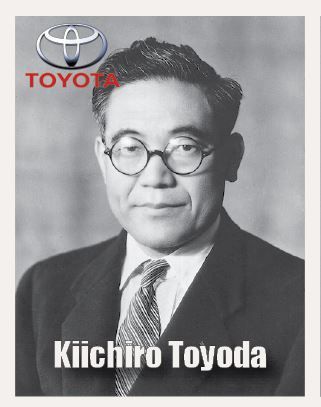
Kiichiro Toyoda – Toyota
Kiichiro Toyoda inherited more than a successful family business—he inherited a culture of innovation.
Recognising the future lay in motor vehicles rather than textile machinery, he established Toyota Motor Company. Its first passenger car, the Toyota Model AA, was introduced in 1936 and represented Japan's growing ambition to produce world-class automobiles.
Beyond the vehicle itself, Toyoda revolutionised manufacturing through the Toyota Production System, introducing concepts such as Just-in-Time production and continuous improvement (Kaizen), which are now studied by manufacturers worldwide.
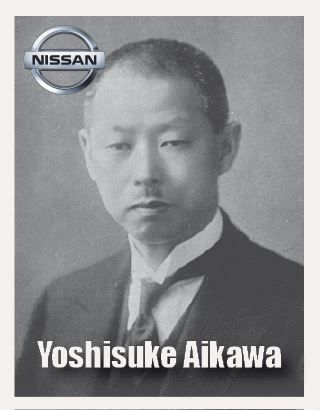
Yoshisuke Aikawa – Nissan
Yoshisuke Aikawa understood that successful vehicle manufacturing required more than great engineering. It demanded strong leadership, investment and an integrated industrial network.
Under his leadership, Nissan expanded production of the Datsun Type 14, one of Japan's earliest mass-produced passenger vehicles. The compact and dependable Datsun became popular both domestically and internationally, laying the foundations for Nissan's future export success.
Aikawa's strategic vision helped transform Nissan into one of Japan's largest automotive manufacturers.
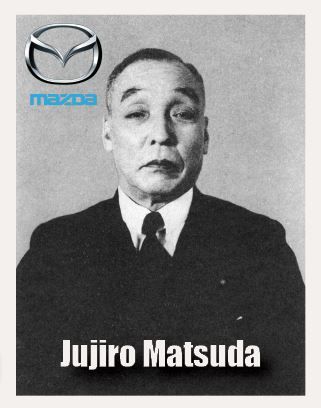
Jujiro Matsuda – Mazda
Jujiro Matsuda believed innovation was the key to standing out in a competitive market.
Mazda entered vehicle production with the Mazda-Go, a three-wheeled utility vehicle introduced in 1931. Affordable, dependable and versatile, it became popular with small businesses throughout Japan.
Decades later, Mazda cemented its reputation for engineering innovation with the 1967 Mazda Cosmo Sport 110S, the world's first production sports car powered by a twin-rotor Wankel rotary engine, proving the company was prepared to challenge conventional engineering.
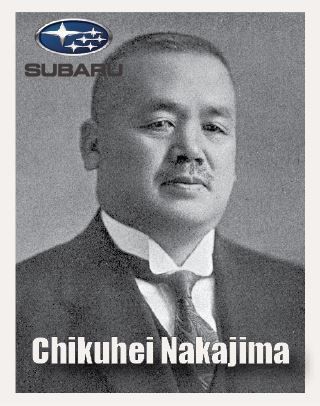
Chikuhei Nakajima – Subaru
Chikuhei Nakajima's engineering career began in aviation, where precision and reliability were essential.
Following the restructuring of Japan's aircraft industry after World War II, his legacy evolved into Fuji Heavy Industries. Subaru's first passenger car, the Subaru 360, was launched in 1958. Nicknamed the "Ladybird," this lightweight kei car became an icon of Japan's post-war recovery and introduced affordable motoring to thousands of families.
Subaru later became famous for its Boxer engines and symmetrical all-wheel-drive technology.
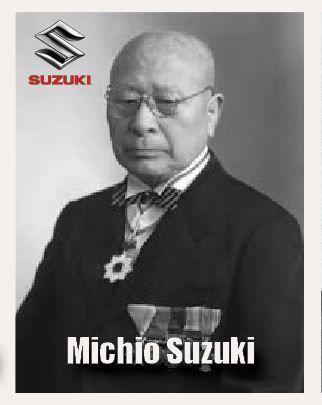
Michio Suzuki – Suzuki
Michio Suzuki recognised that transportation should be practical, affordable and accessible.
After initially producing motorcycles, Suzuki entered the automotive market with the 1955 Suzulight. Compact, economical and remarkably advanced for its time, it featured front-wheel drive, four-wheel independent suspension and rack-and-pinion steering—features uncommon in small cars of the era.
The Suzulight established Suzuki's reputation for building clever, efficient vehicles.
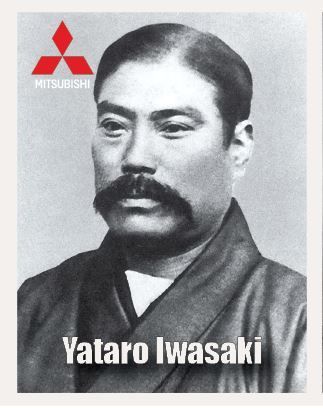
Yataro Iwasaki – Mitsubishi
Yataro Iwasaki's vision extended well beyond automotive manufacturing, creating one of Japan's most influential industrial groups.
Mitsubishi's automotive history began with the Model A, introduced in 1917. It was Japan's first series-produced passenger car, hand-built with luxurious appointments inspired by European touring vehicles. Although only a small number were produced due to high manufacturing costs, the Model A marked an important milestone in Japanese automotive history.
Today, Mitsubishi continues to build vehicles renowned for durability and all-wheel-drive capability.
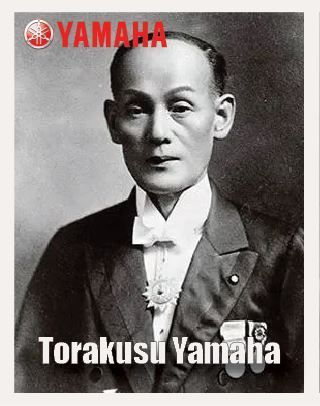
Torakusu Yamaha – Yamaha
Torakusu Yamaha began his career repairing musical instruments, where precision and craftsmanship were essential.
Yamaha's first motorcycle, the 1955 YA-1, quickly earned the nickname "Red Dragonfly." Powered by a 125 cc engine, it won major racing events almost immediately after its release, establishing Yamaha's reputation for quality and performance from the very beginning.
Those same engineering principles continue to underpin Yamaha's motorcycles today.
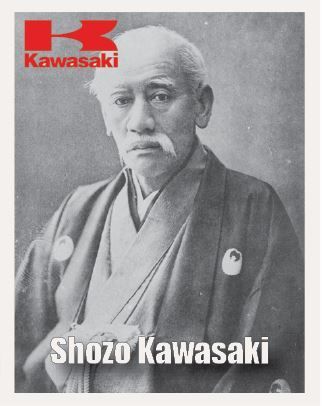
Shozo Kawasaki – Kawasaki
Shozo Kawasaki helped shape modern Japan through heavy engineering.
Although Kawasaki's early business focused on shipbuilding and heavy industry, its motorcycle division emerged in the 1960s. One of its earliest landmark machines, the 1966 Kawasaki W1, became Japan's largest-capacity production motorcycle at the time. It paved the way for legendary models such as the 1972 Kawasaki Z1, a motorcycle that redefined superbike performance.
Kawasaki's expertise in aerospace, rail and marine engineering continues to influence its motorcycle technology.
A Legacy That Continues to Inspire
Each of these pioneers began with a vision that extended beyond simply building vehicles. They focused on solving problems, improving engineering and creating products that would benefit society.
Whether it was Toyota's Model AA, Honda's T360, Mazda's Mazda-Go or Subaru's 360, every great automotive brand started with a single vehicle that reflected its founder's philosophy.
Today, millions of technicians, apprentices, engineers and workshop owners work on the products of these companies every day. Understanding where these brands began provides a deeper appreciation of how innovation, determination and craftsmanship continue to shape the automotive industry.
Their legacy lives on—not only in the vehicles they created, but in every workshop where