From Racing Team to Automotive Legend
Ferrari's ambition was always centred around racing. In 1947, he produced the first car to officially carry his name — the Ferrari 125 S.
It featured a 1.5-litre V12 designed by Gioachino Colombo and marked the beginning of what would become one of the greatest performance-car stories in history.
Ferrari's philosophy was simple: Build great racing cars, and build road cars to help fund the racing team.
It was an unusual business model, but it worked. Ferrari's road cars quickly became objects of desire, while the racing team established itself as a dominant force in international motorsport.
The Prancing Horse
The famous Ferrari badge has its own remarkable story. The Prancing Horse was originally associated with Italian fighter pilot Francesco Baracca, who displayed the horse on his aircraft during World War I. According to Ferrari's account, Baracca's mother, Countess Paolina Baracca, suggested that Enzo use the horse on his racing cars because she believed it would bring him good luck.
Ferrari adopted the symbol, adding the famous yellow background — a reference to Modena, his home city.
The result became one of the most recognisable automotive badges in the world.
A Difficult Personality
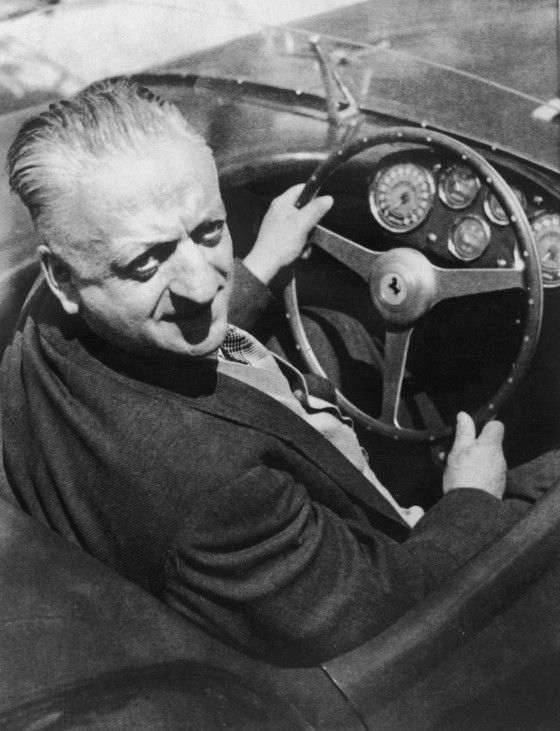
Enzo Ferrari was not known for being easygoing. He was intensely competitive, fiercely protective of his racing team and famously demanding of the people around him. He cared deeply about winning. For Ferrari, second place was rarely something to celebrate.
His relationships with drivers, engineers and even fellow manufacturers could be complicated, but that relentless determination helped create an organisation capable of competing at the highest level.
He also understood something that many manufacturers didn't: People don't simply buy cars — they buy dreams.
Ferrari turned his name into a symbol of speed, exclusivity and Italian craftsmanship.
More Than a Car Company
By the time Enzo Ferrari died in 1988, his name had become synonymous with performance. But perhaps his greatest achievement wasn't a particular Ferrari model or even a racing victory. It was the culture he created. Ferrari became a place where engineers, designers, mechanics and racing drivers could pursue the seemingly impossible. His obsession with racing shaped the company for decades and continues to influence Ferrari today. And perhaps fittingly, one of the final cars developed during his lifetime became one of the most famous Ferraris ever built.
The Ferrari F40
Launched in 1987 to celebrate Ferrari's 40th anniversary, the F40 was raw, lightweight and uncompromising.
It was the last Ferrari developed under Enzo Ferrari's direct involvement.
He died the following year, in August 1988, at the age of 90.
Enzo's Legacy
Enzo Ferrari once famously said: "I build engines and attach them to wheels."
Whether or not that perfectly captures his philosophy, it certainly captures the importance he placed on the mechanical heart of a racing car. Today, Ferrari is one of the world's most famous automotive brands. The badge, the colour, the sound of the engines and the unmistakable shape of its cars are recognised almost everywhere. But behind the legend was a racing driver from Modena who refused to accept that ordinary was good enough.
Enzo Ferrari didn't simply build fast cars. He built a legend around speed.