

Transport for NSW: AIS Online Updates - Defect Clearing Rules
Defects issued by Transport for NSW (Transport) cannot be cleared by examiners. AIS Online now informs examiners about who can clear certain defects.

If the ‘Transport for NSW’ box is marked on the defect notice in the ‘defect to be cleared at’ field, it cannot be cleared in AIS Online. In these cases, examiners must not proceed with an inspection and advise the customer to contact Transport directly. The contact details are included on the defect notice or letter provided to the vehicle owner.
Attempts to clear defects issued by Transport will result in the following message in AIS Online -
"This defect requires clearance at TFNSW'.
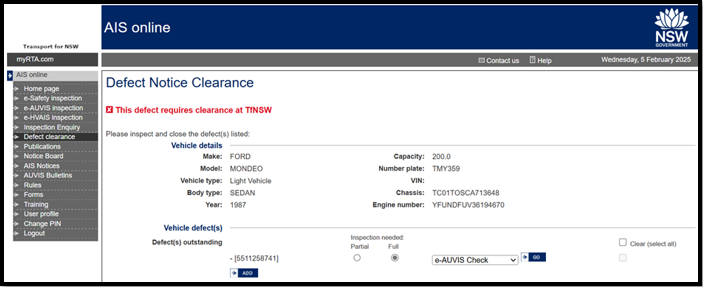
AIS examiners that attempt to clear a defect notice that requires an Authorised Unregistered Vehicle Inspection Scheme (AUVIS) inspection will also receive the following message -
“This defect requires clearance at AUVIS”.
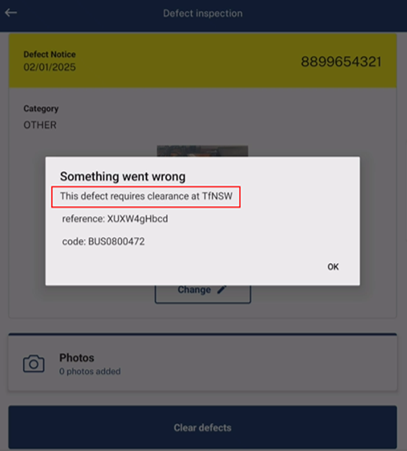
These updates help ensure defects are processed correctly, reducing errors and unnecessary inspections.
Defect clearance for vehicles requiring AUVIS inspection in remote areas.
If the registered vehicle operator lives in a remote area (more than 100km or one and a half hours drive to the nearest AUVIS or HVIS) and the appropriate inspection facility is not available, they can provide the following alternate inspections:
- light vehicles requiring an AUVIS inspection may have an AIS Safety Check
- heavy vehicles requiring an NHVR inspection may have a Heavy Vehicle AIS inspection.
In these cases, the AIS examiner may complete a manual safety inspection (pink slip) report, make appropriate notes in the comments section, and refer the customer to their local Service NSW Centre to have the defect cleared.