Antonella Abbate • 21 November 2024

Renault Eyes Hydrogen Future with Emblème-Inspired Vision

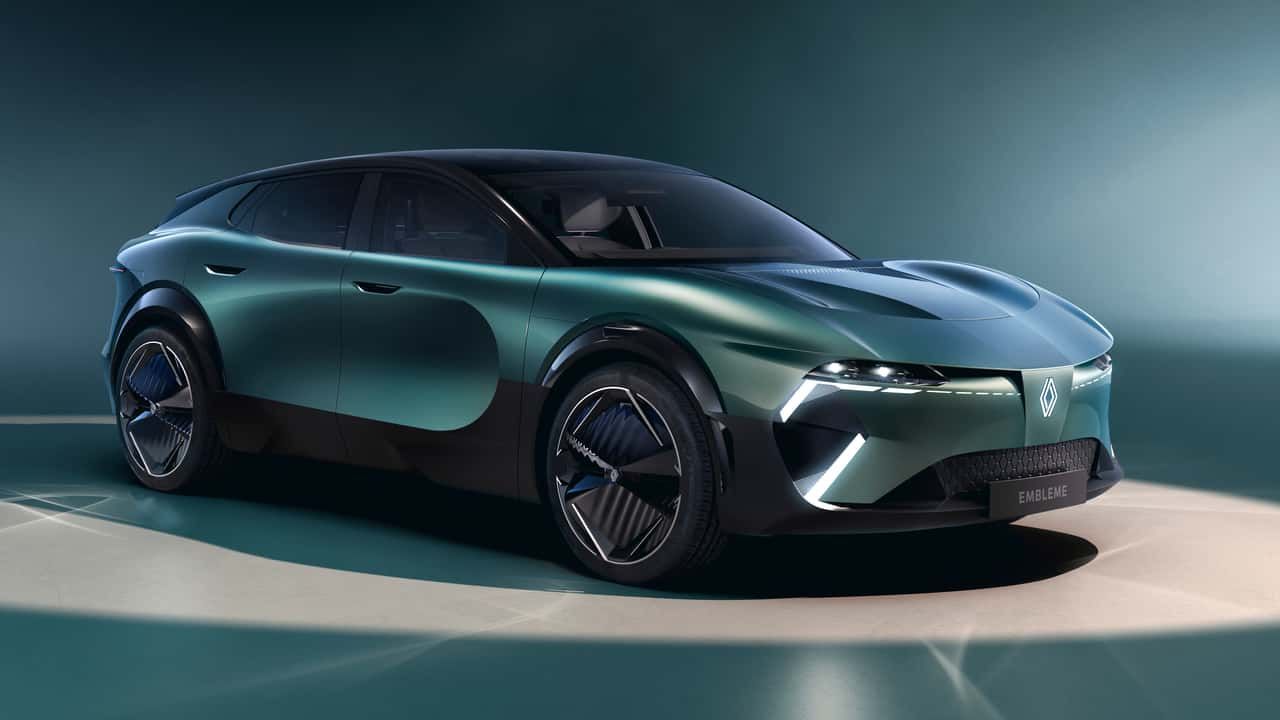
Renault appears ready to embrace the hydrogen-powered car revolution, joining industry heavyweights like Hyundai, Toyota, Honda, and BMW in investing in this clean energy technology. This move not only underscores Renault’s commitment to innovation but also aligns with its storied heritage, symbolized by the iconic Renault Emblème.
Hydrogen Power: A Complement to Electric Mobility


Hydrogen-powered vehicles, or fuel cell electric vehicles (FCEVs), operate by converting hydrogen into electricity through a chemical reaction, emitting only water as a byproduct. Offering longer ranges and faster refueling times than traditional battery-electric vehicles (BEVs), hydrogen technology is increasingly seen as a complementary solution for sustainable transportation.

Renault’s decision to venture into hydrogen aligns with its strategic shift towards environmentally conscious mobility, expanding beyond its successful electric vehicle lineup.


The Renault Emblème: A Symbol of Evolution

.

The Renault Emblème, which has undergone multiple transformations since its debut, has consistently represented the brand’s vision and adaptability. As Renault positions itself at the forefront of hydrogen technology, the Emblème’s modern iteration serves as a symbol of this bold new direction.


This connection between tradition and innovation highlights Renault’s ability to balance its legacy with cutting-edge advancements, such as hydrogen-powered vehicles.


Global Hydrogen Momentum


Renault’s foray into hydrogen is timely, as global interest in the technology gains momentum. With Hyundai’s Nexo, Toyota’s Mirai, Honda’s Clarity Fuel Cell, and BMW’s iX5 Hydrogen leading the charge, Renault’s entry into this market could significantly accelerate hydrogen adoption in Europe and beyond.


Strategically, the automaker is expected to explore hybrid approaches, combining its electric vehicle expertise with hydrogen solutions. Such innovations could address the limitations of BEVs, particularly in heavy-duty and long-range applications.


What’s Next for Renault?


Renault’s investment in hydrogen is a clear signal of its intent to lead in the next chapter of sustainable mobility. The first Renault hydrogen-powered models, potentially featuring design cues inspired by the Emblème, could make their debut within the next few years, further solidifying the company’s role as a pioneer in clean transportation.


As the automotive industry evolves, Renault’s commitment to hydrogen ensures its Emblème will continue to symbolize progress, adaptability, and a vision for a greener future.
by Antonella Abbate 25 May 2026
Across the Tasman this week, Chinese automotive giant BYD confirmed that almost 5,000 electric and plug-in hybrid vehicles are currently bound for Australia aboard its own dedicated vehicle carrier, the BYD Zhengzhou. The shipment, carrying 4,810 vehicles, marks the first Australian voyage of one of BYD’s purpose-built roll-on/roll-off vessels and is expected to dock in Melbourne before continuing to Sydney and Brisbane. What makes this story significant is not simply the size of the shipment, but what it says about the Australian market. BYD has already announced plans to bring an additional 30,000 new-energy vehicles to Australia in the coming months as demand for electric vehicles and hybrids continues to surge. For decades, Australian motorists were among the most loyal supporters of Japanese manufacturers, with brands from Toyota, Mazda, Mitsubishi, Nissan and Honda dominating local driveways. Few industry observers would have predicted that Chinese brands would achieve such rapid acceptance. Yet Australian consumers have embraced brands such as BYD, MG, GWM, Chery, Geely, Zeekr and others with remarkable speed, treating many of them as though they have been established players for generations. Australia’s transition mirrors trends seen throughout Europe and North America, where consumers are increasingly seeking lower running costs, improved technology, longer warranties and electrified drivetrains. The difference in Australia is that much of this growth is being driven by Chinese manufacturers rather than traditional Western brands. Affordability, strong specifications, competitive warranty programs and rapid product development have reshaped buyer perceptions almost overnight. BYD’s decision to deploy its own shipping fleet to Australia is perhaps the clearest signal yet that global manufacturers now view Australia as a strategic growth market. When a manufacturer is prepared to invest in dedicated logistics to deliver thousands of vehicles directly to Australian customers, it demonstrates confidence not only in its products but also in the appetite of Australian motorists for electrified transport. The message is simple: Australia's EV and hybrid revolution is no longer coming—it has arrived, and Chinese manufacturers are playing a leading role in shaping the next chapter of the nation's automotive landscape.
by Antonella Abbate 25 May 2026
Mr Lamb brings decades of diverse leadership experience across various sectors, both domestically and internationally. Most recently, he served as the Chief Executive Officer of the Murray-Darling Association. Previously, Mr Lamb has held several executive roles with distinct peak body organisations, where he worked closely with government and industry. During his tenure, assisted many organisations to transition into new strategies and methodologies. With his notable experience, he is well positioned to lead the ARC at a time when the refrigeration and air conditioning (RAC) industry is growing at a rapid pace. Mr Lamb succeeds Glenn Evans, who concluded his tenure in December 2025 after 17 years of service. ARC Chair Dr Greg Picker said he was pleased to welcome Mr Lamb to mark the next phase for the Council, which leads national governance of the RAC (also known as ARCtick) Permit Scheme. “The Board is pleased to appoint Mark Lamb as our new CEO. We look forward to working with him as we continue to deliver the ARCtick permit scheme and improve our service to industry. His passion and experience in leading peak body organisations perfectly aligns with the ARC’s priorities at this time and our vision for the future,” Dr Picker said. “It is a crucial time for the industry, and the Board is confident Mark will help us build on our momentum and continue deliver meaning outcomes for the ARC and the broader industry.”  Commenting on his appointment, Mr Lamb said, “I am thrilled to be given this opportunity to play this significant role, not just at the Australian Refrigeration Council, but in the refrigeration and air conditioning industry.
by Antonella Abbate 25 May 2026
For a company long associated with precision internal combustion performance engines and premium driving dynamics, the production of BMW Group’s two millionth fully electric vehicle is far more than a symbolic milestone. It represents a major industrial transition within one of Europe’s most engineering-driven automotive manufacturers.