


The Historic Collision:
How the First Car Accident Shaped Modern Safety Features

The Historic Collision:
How the First Car Accident Shaped Modern Safety Features
In the annals of automotive history, the year 1891 marks a significant milestone – the occurrence of the first-ever recorded car accident. This event, which took place in Ohio City, USA, involved a collision between two vehicles, a steam-powered wagon and a horse-drawn carriage. While the incident was relatively minor compared to today's standards, its repercussions echoed through the decades, profoundly influencing the development of safety features in automobiles.
At the dawn of the automotive era, vehicles were novel contraptions, lacking the sophisticated safety systems we take for granted today. The 1891 accident exposed the inherent risks associated with this new mode of transportation, prompting engineers and innovators to prioritize safety alongside performance and efficiency.
One of the immediate consequences of the Ohio City collision was the realization of the need for standardized traffic regulations. Prior to this incident, rules of the road were virtually nonexistent, leading to chaotic and often dangerous conditions. In response, municipalities began enacting traffic laws and establishing traffic signals to mitigate the risk of accidents.
Furthermore, engineers began to explore ways to enhance the safety of vehicles themselves. Early automobiles were rudimentary in design, with little consideration for occupant protection. However, as awareness of the dangers of high-speed collisions grew, so too did the demand for safety innovations
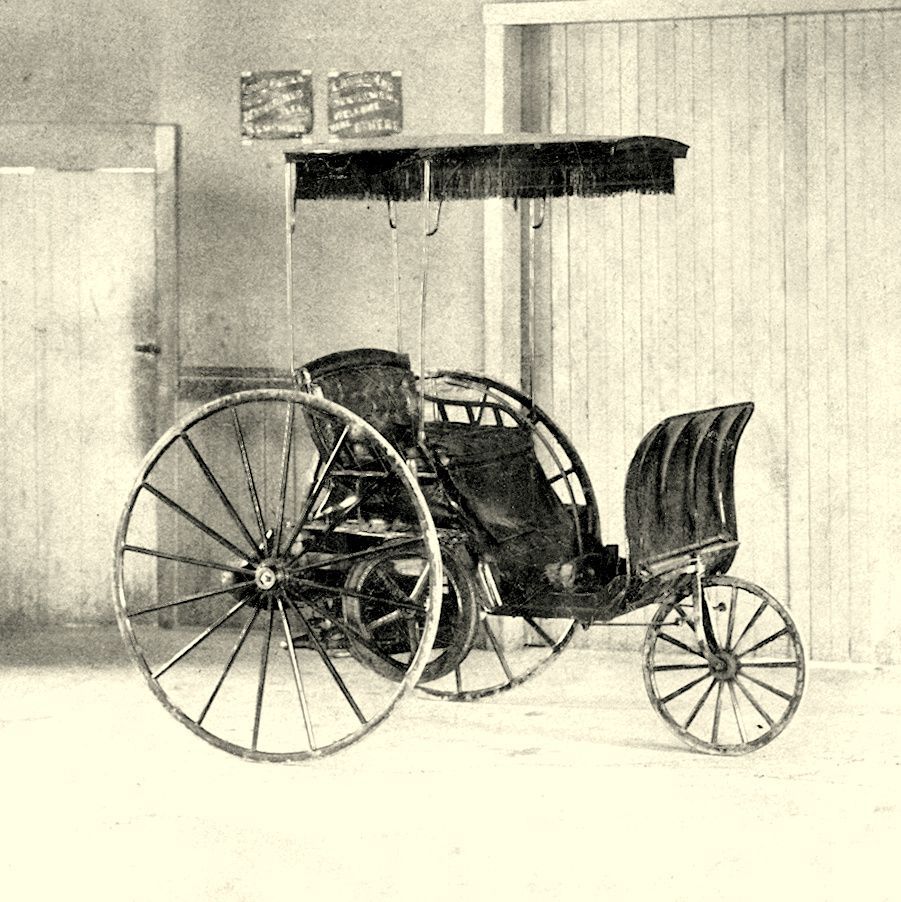
In 1891, Ohio witnessed the debut of the first gasoline automobile produced in the United States, dubbed the Buckeye gasoline buggy or the Lambert gasoline buggy.
Coincidentally, it was also the same year that the inaugural gasoline-powered automobile accident occurred in Ohio City, involving James William Lambert, the creator of the Buckeye gasoline buggy.
The introduction of seat belts in the mid-20th century represented a significant leap forward in automotive safety. Initially conceived as a means to prevent ejection from the vehicle in the event of a crash, seat belts soon became standard equipment in automobiles worldwide. Their effectiveness in reducing the risk of injury in accidents has been well-documented, saving countless lives over the years.
Another critical development spurred by early accidents was the implementation of crumple zones. These engineered structural features are designed to absorb and dissipate kinetic energy in the event of a collision, thereby reducing the severity of impact forces experienced by occupants. Crumple zones have since become integral components of modern vehicle design, significantly enhancing occupant safety in frontal and rear-end collisions.
Advancements in materials science have also played a pivotal role in improving automotive safety. The widespread adoption of high-strength steel, aluminum alloys, and composite materials has enabled manufacturers to construct vehicles that are both lightweight and highly crash-resistant. Additionally, the integration of advanced airbag systems, including side curtain airbags and knee airbags, has further enhanced occupant protection in a variety of crash scenarios.
The legacy of the first car accident in 1891 continues to reverberate through the automotive industry to this day. From the implementation of standardized traffic regulations to the development of sophisticated safety technologies, each subsequent collision has served as a catalyst for innovation and improvement. As autonomous driving technologies and artificial intelligence continue to reshape the future of transportation, the quest for safer roads and vehicles remains an enduring priority.
In retrospect, the significance of the Ohio City collision transcends its historical context, serving as a poignant reminder of the imperative to prioritize safety in the relentless pursuit of progress. While the road ahead may be fraught with challenges and uncertainties, one thing remains abundantly clear – the lessons learned from the past will continue to guide us towards a safer and more secure future on the world's highways and byways.