

June is Men's Mental Health Month
The Safety Issue We Don't Always See in the Workshop
"It's OK Not To Be OK."
If you're struggling, talk to someone. If a mate is struggling, check in. A five-minute conversation could change, or save, a life.
When people think about workshop safety, they often think about vehicle hoists, power tools, hazardous chemicals, and personal protective equipment. While these hazards are important, there is another workplace risk that is often overlooked—mental health.
The automotive industry is largely male-dominated, and many technicians, apprentices, workshop managers and business owners face significant pressures every day. Long hours, demanding workloads, financial pressures, customer expectations, physical strain, and the challenge of balancing work and family life can all take a toll on mental wellbeing.
Unfortunately, many men still find it difficult to talk about their mental health.
According to Beyond Blue, only 37% of Australian men seek help when they need it, while many continue to bottle up their emotions and try to manage problems on their own. This reluctance to seek support can allow small issues to develop into serious mental health challenges.
The statistics paint a concerning picture.
Every day in Australia, approximately nine people die by suicide, and seven of those are men. Suicide remains one of the leading causes of death among Australian men, claiming more lives each year than the national road toll. Around 43% of Australian men will experience anxiety or depression at some stage in their lives, yet many delay seeking help.
Workplaces can play a significant role in both positive and negative mental health outcomes. Safe and supportive workplaces can improve wellbeing, while excessive workloads, poor workplace culture, bullying, job insecurity, fatigue, and financial stress can contribute to mental health challenges. Beyond Blue reports that work plays a significant role in the lives of more than 14 million Australians, highlighting the importance of mentally healthy workplaces.
For tradespeople and workers in blue-collar industries, the risks can be even greater. Men account for the overwhelming majority of workplace fatalities in Australia, with 180 of the 188 workplace deaths recorded in 2024 involving male workers. Many of the occupations with the highest injury and fatality rates are trades and technical occupations.
Research from mental health organisations working with trade industries has found that workers often face unique pressures including:
- Long working hours
- Financial stress and cost-of-living pressures
- Physical injuries and chronic pain
- Job insecurity
- Workplace bullying and harassment
- Relationship and family pressures
- A reluctance to ask for help
These challenges can create a culture where many men feel they need to "tough it out" rather than reach out. Unfortunately, silence often makes things worse.
A mentally healthy workshop starts with open conversations. Checking in with workmates, recognising when someone may be struggling, and creating an environment where seeking help is encouraged can make a significant difference.
Signs that a workmate may be struggling include:
- Increased irritability or anger
- Withdrawal from colleagues or social activities
- Reduced concentration or productivity
- Increased alcohol or substance use
- Changes in mood or behaviour
- Frequent absences from work
- Expressions of hopelessness or feeling overwhelmed
Looking after mental health is no different from looking after physical safety. Just as we wear safety glasses to protect our eyes and use hoists to safely lift vehicles, we need to take steps to protect our mental wellbeing.
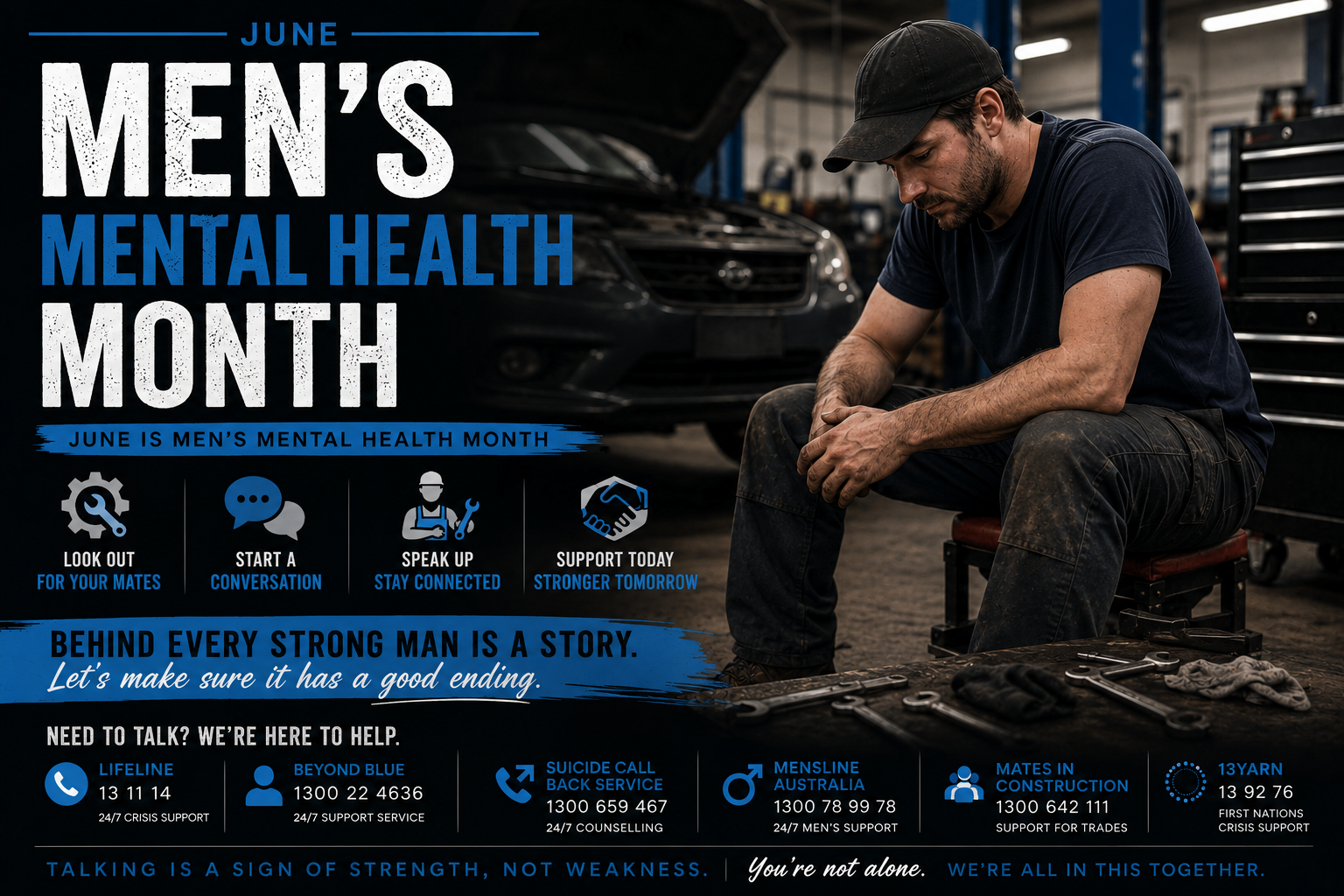
Mental Health Support Services Australia
If you or someone you know needs support, these services are available 24 hours a day:

Lifeline Australia
13 11 14
24/7 Crisis Support
Beyond Blue Support Service
1300 22 4636
24/7 Mental Health Support
Suicide Call Back Service
1300 659 467
24/7 Counselling & Support
MensLine Australia
1300 78 99 78
24/7 Support for Men
13YARN
(First Nations Crisis Support)
13 92 76
MATES in Construction
1300 642 111
Mental Health and Suicide Prevention Support for Trades and Construction Workers.
A simple conversation can save a life.
If you're concerned about a mate, ask how they're doing. Listen without judgement. Encourage them to seek support if needed. You don't need to have all the answers—you simply need to be willing to start the conversation.
Because real strength isn't staying silent. Real strength is knowing when to ask for help.